

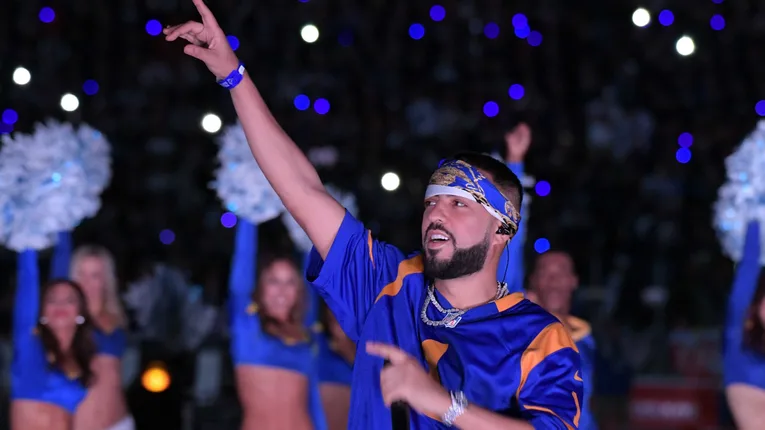
When French Montana first claimed he could go hit-for-hit with Kendrick Lamar in a Verzuz battle, most hip-hop fans treated it like pure delusion. On paper, Kendrick’s catalog, critical acclaim, and cultural impact place him in a completely different category. But after French Montana’s recent Verzuz showdown with Rick Ross, that old statement suddenly feels a lot less ridiculous — at least within the specific rules of Verzuz culture.
French Montana has always occupied an unusual space in hip-hop. While critics often question the strength of his solo artistry, few can deny his ability to create moments. Throughout his career, he’s mastered the art of attaching himself to major records, finding hitmakers at the right time, and building songs that dominate clubs, playlists, and radio rotations.
That formula became especially clear during his battle with Rick Ross.
Although Ross entered the Verzuz with what many considered the stronger overall discography, French managed to stay competitive largely through collaborative anthems that still hold major nostalgic and commercial weight. Songs like “Unforgettable” with Swae Lee, “Lockjaw” with Kodak Black, and appearances on records like A$AP Ferg’s “Work” remix and Bobby Shmurda’s “Hot N****a” reminded listeners just how present French was during a certain era of rap dominance.
Even tracks like “Freaks” featuring Nicki Minaj and “Smoking Part 2” with Max B leaned into French Montana’s greatest strength: creating memorable moments, hooks, and vibes rather than deeply layered solo performances.
That’s where the Kendrick Lamar comparison becomes more interesting.
In a traditional conversation about artistry, storytelling, or album quality, Kendrick Lamar clearly stands above French Montana. Albums like good kid, m.A.A.d city, To Pimp A Butterfly, and Mr. Morale & The Big Steppers cemented Kendrick as one of hip-hop’s defining artists. But Verzuz battles don’t always reward lyrical complexity or conceptual greatness. They reward crowd reaction, familiarity, replay value, and anthem power.
French Montana’s catalog is built almost entirely around those elements.
Meanwhile, Rick Ross also benefits from collaborations, but his catalog feels more complete beyond the singles. Ross has built a reputation for strong album cuts, commanding solo verses, and luxurious street records that stand on their own regardless of features. His presence alone often carries a record.
French’s music works differently. His strength has never been domination through lyricism or concept albums. Instead, he thrives through timing, energy, hooks, and association with unforgettable records. Sometimes a short French Montana chorus leaves a bigger impact than a technically stronger full-length rap performance.
That reality was on full display during the Verzuz battle.
For many viewers, the event also reignited appreciation for French Montana’s role during the 2010s mixtape and club era. From his Bronx roots to his mainstream crossover success, French consistently found ways to remain relevant even when public opinion shifted around him.
Interestingly, former NBA star Kenyon Martin recently argued that Rick Ross has a stronger catalog than Kendrick Lamar — a take that sparked major debate online. But if fans are willing to entertain that kind of Verzuz-based logic, then French Montana’s old statement starts to make more sense in context.
No, French Montana is not viewed as a greater artist than Kendrick Lamar. But when measured strictly through the lens of anthems, collaborations, recognizable hits, and crowd-friendly records, his catalog becomes a lot more competitive than many initially gave him credit for.